If you asked a Back Bay resident in June whether Open Newbury Street was happening this year, plenty would have shrugged. As Boston.com reported in May, the city was still weighing the schedule. It didn't confirm dates until early June, and even after Mayor Michelle Wu addressed the uncertainty directly on Reddit, the answer was still "yes, but scaled back." The reason: 2026 is already crowded with World Cup programming, Boston's 250th anniversary events, and a Tall Ships visit, and the city only has so much staff to close streets safely.
That delay is worth sitting with, because it's not really a story about one event's scheduling. It's a preview of how the whole neighborhood is handling a year with more demand than usual for the same fixed amount of space. Back Bay can't widen Newbury Street. It can't add a ninth block to the eight-block stretch between Berkeley and Massachusetts Avenue. So when there's more to fit in, whether that's car-free Sundays or new restaurants, the solutions compress in time or stack in height. Both are happening right now, and if you live here, both change how you should plan the next two months.
The Sundays that are left
Open Newbury Street's 2026 run started July 12, and the first two dates carried no vendor programming, just open sidewalks and no traffic, while the city worked out the rest. Dates that have already passed include July 19, 26, August 2, 9, and 23. What's left this fall:
- Sunday, September 6
- Sunday, September 13
- Sunday, September 20
- Sunday, October 11
There's also a December date for a holiday stroll, following the same format the city piloted in 2024, though it hasn't been announced yet. Each remaining Sunday runs 10 a.m. to 6 p.m., car-free from Berkeley to Massachusetts Avenue, with parking restrictions starting at 5 a.m. that morning.
Ten total dates plus a December stroll roughly matches last year's count, so the calendar isn't actually shorter. What changed is the certainty. Past years had dates locked in well before summer. This year the announcement came late enough that residents were genuinely unsure whether it was happening at all, which tells you something about how much is competing for the same civic bandwidth this year. If you've been building your Sunday routine around Newbury Street being open, the next three weekends and one date in October are what's left before the calendar resets for 2027.
The market outlasts the street closures
Here's a detail that's easy to miss if you're only tracking Open Newbury: the Copley Square Farmers Market has a longer season than the car-free Sundays do. The market runs Tuesdays and Fridays, 11 a.m. to 6 p.m., from mid-May through November 24, set up at McKim Plaza in front of the Boston Public Library's central branch. Open Newbury wraps its regular Sunday schedule on October 11. The market keeps going for another six weeks after that.
More than three dozen Massachusetts vendors rotate through over the season, and the market accepts SNAP and WIC benefits along with cash and cards. It's one of the larger farmers markets in the city by vendor count, and its run through late November means it's still the reliable weekday errand even after the pedestrian-only Sundays end for the year. If your routine is built around one or the other, it's worth knowing they don't actually end at the same time.
The weekend two events almost collide
The last confirmed Open Newbury Sunday, October 11, lands six days before the Boston Book Festival returns to Copley Square on October 17. It's the festival's 18th year, and this year's lineup includes more than 200 authors across roughly 80 events, all free on the main day. The Saturday programming spreads across venues ringing the square: the Boston Public Library, Old South Church, the Goethe-Institut, Church of the Covenant, and Trinity Church.
The festival also has a ticketed opening night on October 16, with author Michael Lewis in conversation with Pulitzer winner Geraldine Brooks at Old South Church. Confirmed keynote speakers for the weekend include Edwidge Danticat, Imbolo Mbue, Emily Wilson, Renée Watson, Tess Gerritsen, and Walter Mosley, with the full session schedule expected in mid-September. If you're the kind of resident who plans a month out, this is the one to put on the calendar now, since Copley Square gets genuinely packed on festival weekends and dinner reservations nearby tend to go fast.
What's actually building up on Newbury Street
Here's where the compression logic shows up most clearly, and it's the part of this fall's story that a quick scroll through "new restaurants in Boston" roundups will miss entirely. Back Bay's most talked-about openings this year didn't claim new ground. They stacked inside buildings that were already standing.
The clearest example is at 400 Newbury, inside the Lyrik Back Bay development. Rosa y Marigold, the Peruvian restaurant from JuanMa Calderón and Maria Rondeau, the team behind Somerville's Celeste and Cambridge's La Royal, opened its 100-seat dining room there in mid-April. Directly above it, on the floor upstairs, Avra Estiatorio, a 250-seat Greek seafood restaurant with sibling locations in Beverly Hills, Miami, and Dallas, opened the same week. Two full-scale restaurants, two different cuisines, occupying the same building footprint by going vertical instead of sideways. A few doors down that same stretch of Newbury, Nana's Green Tea, the Tokyo-born matcha café chain, opened its own storefront in July.
Retail followed the identical pattern. The Swiss running brand On opened its first Boston store at 138 Newbury in April, timed to marathon week, building a two-level layout inside roughly 2,800 square feet while keeping the original facade intact. Down the street, CNCPTS opened a flagship at 18 Newbury spanning three full floors connected by a central staircase, with a dedicated women's luxury boutique occupying the top level by itself.
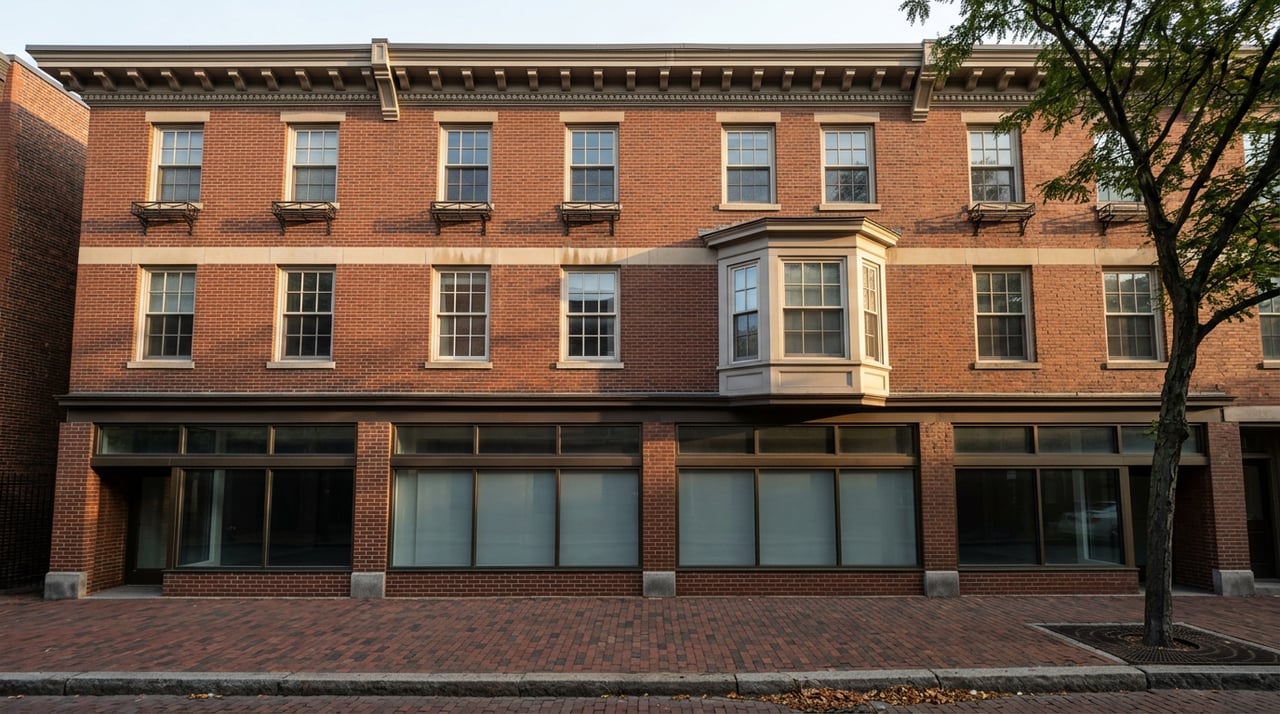
None of this required a new building or a wider lot. Back Bay's rowhouse stock was platted on narrow lots in the late nineteenth century, and there's no room to widen a storefront the way a suburban strip mall might add a bay. What's happening instead is landlords and brands using floors they already control, layering more square footage into buildings that were already full width.
What this means if you live here
The version of Back Bay you'll experience this fall depends on which direction you're looking. On the street, the neighborhood's public calendar is squeezed into fewer confirmed weekends than residents were used to expecting by early summer. Indoors, the neighborhood is denser than it was a year ago, with entire new dining rooms and retail floors added.
Practically, that means:
- Plan around September 6, 13, 20, and October 11 for the last car-free Sundays of the season, and watch for a December date closer to the holidays.
- The Copley Square Farmers Market runs Tuesdays and Fridays through November 24, so it outlasts the Sunday closures by more than a month.
- Book dinner or a Book Festival day trip for the weekend of October 16 to 17 early, since both events draw crowds to the same six blocks.
- If you haven't been up the stairs at Lyrik or into CNCPTS's upper floors, most of what's new this year isn't visible from the sidewalk.
If you're weighing a move into a building on this stretch, that same fixed-lot logic applies to real estate the same way it applies to restaurants and retail. A narrow nineteenth-century footprint means the floor plan you're touring is often the floor plan you're getting, with any real expansion happening up, not out. That's exactly the kind of detail worth walking through with someone who does this daily.
If you're thinking about what a Back Bay address actually means for your next move, FlyBuyBoston is a good place to start that conversation. Let's get started, schedule a consultation with Joe.