Thinking about renovating before you sell? In Greater Boston, the smartest project is not always the biggest one. If you want to protect your time, budget, and eventual resale price, it helps to know which updates buyers actually respond to in Boston’s core neighborhoods and in nearby suburbs like Norfolk. This guide breaks down the renovation projects that tend to resell well, where they make the most sense, and how to avoid expensive work that does not pay you back. Let’s dive in.
Why location changes the math
Greater Boston is not one uniform resale market. Boston and Norfolk can sit at similar owner-occupied home values, but they operate differently in practice.
Boston has a much lower owner-occupied housing rate at 35.7%, while Norfolk is far more owner-occupied at 94.9%. That matters because Boston buyers are often shopping condos, brownstones, and compact city homes where polished presentation and convenience carry real weight. In Norfolk, buyers are more likely to focus on function in larger homes, including layout, storage, and usable outdoor space.
The broader market also supports a practical approach. In August 2025, median sale prices in Greater Boston were $935,000 for single-family homes and $697,000 for condos, with median days on market of 23 and 32 respectively. In a market like this, buyers notice condition quickly, and the right updates can help your home feel more move-in ready from day one.
Start with the projects buyers notice first
If your goal is resale, the strongest local pattern is fairly simple. Buyers tend to reward homes that feel updated, functional, and easy to live in without needing immediate work.
Across recent local sales examples in places like Back Bay, the South End, Jamaica Plain, and Norfolk, the same themes show up again and again. Updated kitchens and bathrooms matter most, especially when they are paired with practical features like central A/C, laundry, parking, office space, mudroom function, or outdoor access.
That does not mean every house needs a major renovation. In fact, the local data points in the opposite direction. In many cases, a focused refresh does better than a full gut job.
Kitchen updates lead the pack
Minor kitchen remodels often win
If you are deciding where to spend first, the kitchen is usually the clearest place to start. The 2025 Remodeling Impact Report gave a kitchen upgrade a Joy Score of 10, and 48% of Realtors reported increased demand for kitchen upgrades over the last two years.
Boston’s 2025 Cost vs Value report makes the resale case even clearer. A minor kitchen remodel recouped 119.2% of cost, while a major kitchen remodel recouped 40.8%. The New England 2024 Cost vs Value report showed a similar pattern, with 110.8% recoup for a minor kitchen remodel versus 58.1% for a major one.
What a smart kitchen refresh looks like
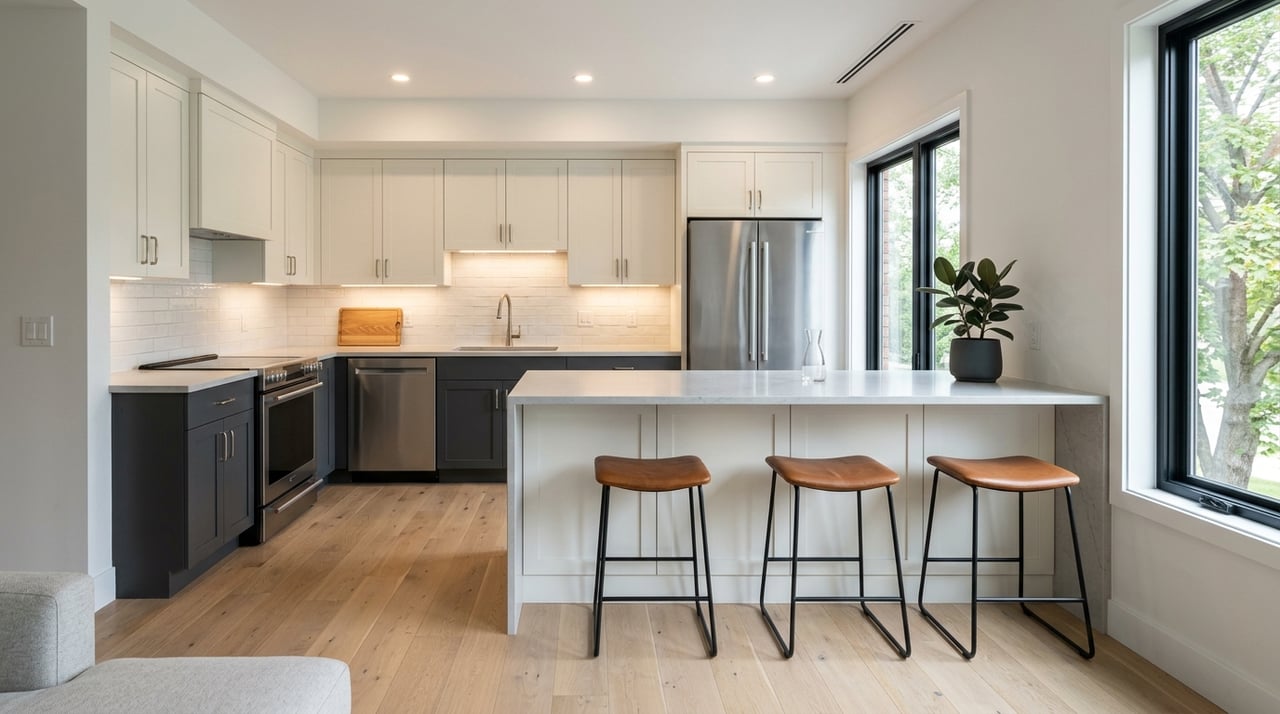
In Greater Boston, a resale-minded kitchen project usually means improving what already works instead of rebuilding everything. If the layout is serviceable, you may be better off keeping it and upgrading the finishes and function.
Common high-impact kitchen updates include:
- Cabinet refacing or repainting
- New countertops
- Updated appliances
- Better lighting
- Fresh flooring
- Hardware and fixture replacements
For Boston condos and brownstones, this approach often fits the market especially well. Buyers tend to value clean finishes and a polished, move-in-ready feel more than an oversized, heavily customized kitchen.
Bathroom refreshes usually beat additions
Update the bath you have
Bathrooms are another strong resale category, but the numbers suggest restraint. Boston’s 2025 Cost vs Value report puts a midrange bathroom remodel at 65.3% recoup, while a bathroom addition recoups 42.5%.
That points to a simple strategy. Before you add square footage, make the baths you already have feel fresh, functional, and current.
Focus on clean, durable finishes
Recent local listing examples suggest buyers respond well to bathrooms that look bright, practical, and easy to maintain. White tile, marble accents, double vanities, and crisp, updated finishes show up often in sold homes.
For resale, you usually do not need an oversized spa-style room. A better play is often a well-executed refresh that improves appearance, storage, lighting, and daily use.
Energy and comfort upgrades add confidence
Buyers care about systems
Not every valuable renovation is visible in the listing photos. In older housing stock, practical system upgrades can reduce buyer anxiety around future bills, maintenance, and comfort.
Nineteen percent of homeowners remodel to improve energy efficiency, according to NAR. In Boston’s 2025 Cost vs Value report, HVAC conversion or electrification recouped 82.3%, and vinyl window replacement recouped 69.7%.
Where these upgrades make sense
If your home has aging mechanicals, drafty windows, or uneven heating and cooling, these improvements can strengthen your resale position. They may not create the same instant visual reaction as a new kitchen, but they often help buyers feel the home has been responsibly maintained.
Mass Save also offers no-cost home energy assessments, and rebate rules for heat pumps changed effective January 1, 2026. For many Greater Boston homeowners, that makes energy planning worth exploring early in the process.
Layout tweaks can help when they solve a problem
Small changes often outperform big additions
Floor plan changes can absolutely improve resale, but they need to be targeted. The local numbers show that expensive additions often do not return enough when resale is the goal.
For example, a primary suite addition had a high Joy Score nationally, but Boston’s 2025 Cost vs Value report showed only 39.2% recoup for that project. By comparison, a basement remodel recouped 62.6%, suggesting that improving underused existing space may be a more practical move.
Focus on function, not just square footage
The best layout changes usually fix a real day-to-day issue. In Greater Boston, that might mean opening a cramped kitchen and dining connection, creating a small office nook, improving lower-level usability, or adding mudroom-style function near an entry.
Recent sold homes in Jamaica Plain, the South End, Back Bay, and Norfolk often highlighted open living flow, larger kitchens, primary-suite function, office space, and outdoor access. That is a useful signal that buyers reward better use of space, not just more of it.
What local sold homes suggest
Boston-core buyers reward polish and convenience
In Boston’s core neighborhoods, buyers often pay attention to how complete the home feels. A Back Bay condo sale highlighted a recently renovated kitchen and updated bath. A South End penthouse sale paired a quartz kitchen and marble bath with central A/C, in-unit laundry, private outdoor space, and parking.
That package matters. In city properties, attractive finishes become even more valuable when they are bundled with comfort and convenience.
Suburban buyers reward flow and livability
In places like Norfolk, the pattern shifts a bit. Sold homes there often emphasized renovated kitchens, updated baths, open floor plans, primary-suite function, and usable backyard space.
That aligns with what many suburban buyers want from a larger owner-occupied home. The renovation does not need to be flashy, but it does need to improve how the home lives.
Projects most likely to resell well
Based on the local research, these renovation categories are the most likely to support resale in Greater Boston:
- Minor kitchen refresh
- Bathroom refresh or targeted modernization
- Energy and comfort upgrades like HVAC electrification, windows, or insulation
- Small layout tweaks that improve flow or usable space
- Major additions or full gut renovations only when neighborhood comps clearly justify them
If you are preparing to sell, this ranking can help you prioritize. It is often better to complete two or three high-impact, moderate-cost updates than to sink your budget into one oversized project.
Don’t ignore permits and timing
Boston projects need early planning
If your property is in Boston, permits are a real part of the renovation equation. Boston Inspectional Services says building, electrical, plumbing, and gas permits must be applied for before work begins.
The city also recommends checking permit history, zoning, legal occupancy, and whether landmark review applies. For anything beyond cosmetic work, defining the scope early can help you avoid costly surprises later.
Older homes can add complexity
Massachusetts requires licensed plumbing work with local permits. Boston also reminds homeowners that any place built before 1978 where a child under six lives must be made lead-safe.
In older Boston and Norfolk homes, these issues can affect timeline, cost, and planning. If you are renovating with resale in mind, this is one more reason to make project decisions before you feel rushed.
How to choose the right renovation strategy
The best resale project is usually not the one that sounds most impressive. It is the one that improves first impressions, solves a clear functional pain point, and fits what buyers already reward in your segment of the market.
For a Beacon Hill, Back Bay, or South End condo, that may mean a lighter kitchen and bath refresh with strong finishing details and convenience upgrades. For a larger home in Norfolk or another suburban setting, the better move may be improving layout flow, storage, bath function, and comfort systems.
A calm, data-driven plan can make a big difference, especially when permits, timeline, and pre-listing preparation all affect your launch strategy. If you want help sorting through what is worth doing before you sell, Joe Castro can help you build a practical renovation plan around your home, your timing, and your likely resale market.
FAQs
Which renovation adds the most resale value in Greater Boston?
- A minor kitchen refresh stands out most clearly in the local data, with Boston’s 2025 Cost vs Value report showing 119.2% cost recoup for a minor kitchen remodel.
Are major kitchen renovations worth it before selling in Boston?
- Usually not if resale is your main goal, since Boston’s 2025 Cost vs Value report showed 40.8% recoup for a major kitchen remodel compared with much stronger returns for a minor one.
Should you add a bathroom before selling a home in Greater Boston?
- In many cases, updating an existing bathroom makes more financial sense than adding a new one, because Boston’s 2025 figures showed stronger recoup for a midrange bath remodel than for a bath addition.
Do energy upgrades help home resale in Boston-area properties?
- Yes, especially in older homes, because upgrades like HVAC electrification and window replacement can reduce buyer concerns about comfort, maintenance, and future operating costs.
Do Boston renovation projects require permits before work starts?
- Yes, Boston Inspectional Services says building, electrical, plumbing, and gas permits must be applied for before work begins.
Are layout changes worth it before selling in Norfolk or Boston?
- They can be, especially when they solve a real functional issue like poor flow, lack of office space, or underused lower-level area, but large additions often have weaker resale recoup unless local comps support them.